Pollinator Garden
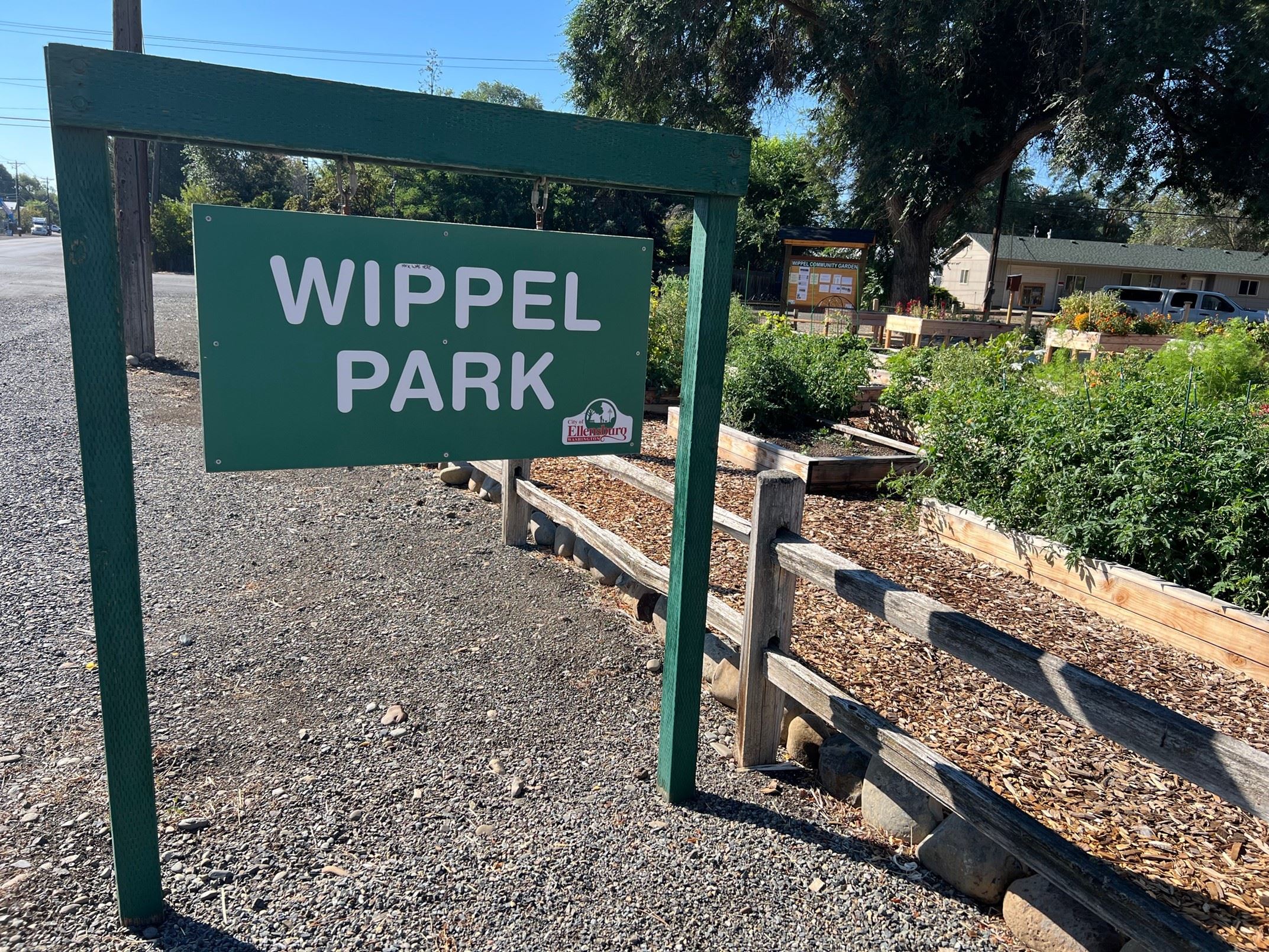 Wippel Park Family History
Wippel Park is named for Maurice ‘Mose’ Wippel and family who donated the land to build a children’s playground for the community.
Mose Wippel (1909-1991) was the seventh child of John H. Wippel and Josephine Guzwiller Wippel. John was known for having built the Arcade building on Main Street, which at one time housed the longest bar in Washington State, and now is home to Windy Stitches and Stash, Ace Body Piercing, and Old Skool’s.
After graduating from St. Martin’s High School in Olympia in 1927 and returning to Ellensburg, Mose opened Wippel’s Food Mart in 1929.
Over the years, he served as the president of the Washington State Grocers’ Association, the Ellensburg (Noon) Rotary, and the Chamber of Commerce. At one time, he had three grocery stores in Ellensburg, and was deeply involved in the community.
In 1940, Mose Wippel donated land adjacent to his store to the city of Ellensburg for use as a children’s playground. Over the years, many clubs and organizations purchased equipment for the playground including the Ellensburg (Noon) Rotary, the Ellensburg Kiwanis Club, and the Ellensburg Lions Club. In November 1962, the City Council named the park after Wippel.
Wippel Park Information Board
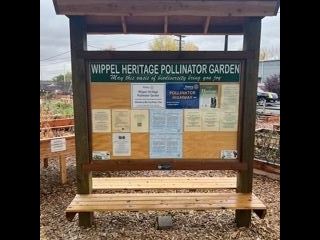 Garden Etiquette
Please remain on the primary or secondary pathways when visiting this garden. Help protect the ground bees and drip irrigation system.
Herb Etiquette
Herbs in the pots are for community use. Please only harvest what you can use fresh. Please leave the majority of the plant for the pollinators. Thank you for this consideration.
We Want Your Photos
Please submit your photos of Wippel Heritage Pollinator Garden pollinators, plants, and other wildlife to the City’s Pollinator Garden webpage manager at klaussn@ellensburgwa.gov. Photos MUST be submitted as a high-resolution attachment. Please provide your name, date photo was taken, name of the pollinator, plant, or other wildlife, and the name and number of the associated flower or feature, if known. Unique photos and first-time photos of pollinator, plants, and other wildlife will be posted to one of the photo slideshows.
Good For One Meal
If you find a rock with the Rotary logo on it that reads "Good For 1 Meal" you can return it to one of the three Rotary clubs in Ellensburg to join them for one of their weekly meetings. As their guest, they will purchase your meal and answer any of your questions about Rotary. Rotary Club contact information is posted at the park.
The information board was an Eagle Scout Project by Ben Carter, of Troup 493, completed in July 2024.
Environmental Graphic Design Posters by Central Washington University Students:
Cascade Penstemon
"Highlighting the beauty that surrounds us here in Central Washington I chose to depict the shrub steppe, specifically the native flower Cascade Penstemon. This poster is a reminder of the importance of sustaining the native plants and animals that call the shrub-steppe home. As a direct call to Ellensburg and our historic downtown, I took inspiration from the ghost signs faded into the brick of many buildings. The influence is seen in the placement of the type and the texture added to the poster itself. I hope to bring together the community of Ellensburg and the preservation of the shrub-steppe with the combination of subject matter and execution of this poster."
Contact: Katie Self, selfka@cwu.edu
Nature's Pulse
"'Nature's Pulse' is a conservation poster that visually and emotionally reconnects us with the land we live on—specifically the rich natural beauty of Washington State.
The heart at the center of the design is composed of elements from the region’s landscapes—trees, rivers, grasslands, and wildlife—symbolizing that nature is not separate from us; it is us.
This piece was created to remind viewers that the environment is more than scenery—it’s the life force we depend on. The message "Nature beats at the heart of us all" reinforces this shared connection, calling for care, urgency, and responsibility.
In an age of rapid environmental loss, this poster serves as both a love letter to nature and a plea to protect what sustains us before it’s too late. Through this work, I aim to evoke emotion, reflection, and action—because when nature suffers, so does the heart of humanity."
Contact: Ethan Magnaghi, ethan.magnaghi@gmail.com
Flourish, Not Fade
"Flourish, Not Fade is inspired by the Pollinators Garden of Ellensburg and was created to honor the critical relationship between pollinators and plant life. At the center of this piece is a bee, carrying vibrant local blossoms as a symbol of life, renewal, and the interconnectedness of species.
The composition is simple yet bold, using a stylized visual language to depict the bee not just as a symbol, but as a living force vital to the survival of countless ecosystems. The flowers emerging from its body—yarrow, blanketflower, and milkweed—are native flora that thrive through pollination. These plants were intentionally selected to highlight the region’s biodiversity and the importance of preserving local habitats.
The phrase Flourish, Not Fade serves both as a call to action and a hopeful affirmation. It encourages viewers to reflect on the future of our natural spaces and the essential role each of us plays in protecting them. Without pollinators, we risk losing not only the beauty of our blooms, but the delicate balance of entire ecosystems."
Contact: Rebecca Sneeringer, rebeccasneeringer16@gmail.com